
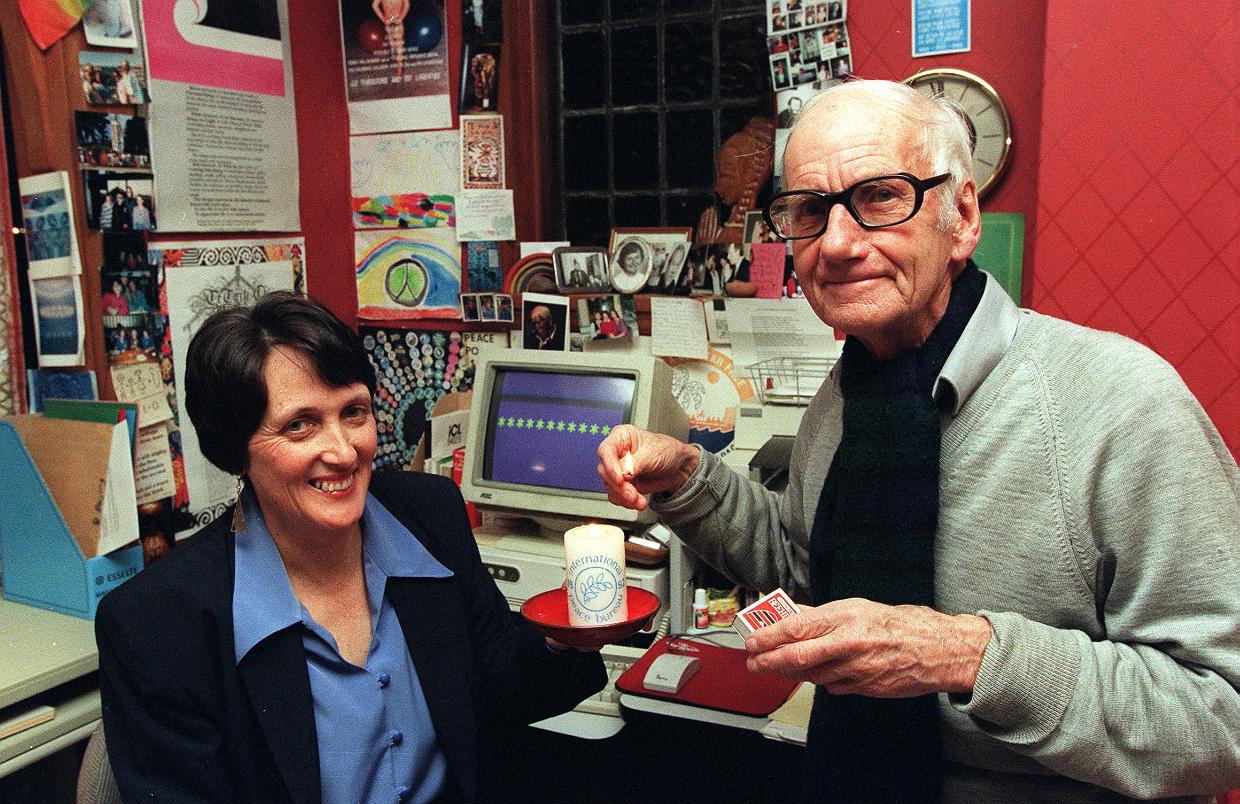
Christchurch peace campaigners Kate Dewes and Harold Evans, pictured in July 1996, the week that the World Court ruled that the threat or use of nuclear weapons was contrary to international law.
Thirty years ago today, on July 8, 1996, the United Nations International Court of Justice, also known as the World Court, handed down a landmark advisory opinion affecting every one of us.
The court ruled that the threat or use of nuclear weapons would generally be contrary to the rules of international law. It also ruled that those states which possessed nuclear weapons (currently the US, Russia, Britain, France, China, Israel, India, Pakistan and North Korea) have an obligation to pursue nuclear disarmament under strict international control.
There was a good reason for this judgment. Nuclear weapons are unlike any other weapon. They operate indiscriminately, would kill hundreds of thousands or even millions of civilians on impact, and produce ongoing deadly radiation and catastrophic damage to the planet.
Recent studies show that even a “small” nuclear war – using, say, just 1% of the world’s nuclear stockpile – would result in a “nuclear winter” likely to cause starvation for up to 2 billion people, and would affect even far corners of the world like New Zealand.
The bombs used in Japan in 1945 were relatively small; today’s nuclear weapons are vastly more destructive. Scientists writing for the Nuclear Ban
Monitor have recently calculated that the combined power of the nuclear weapons still in existence is equivalent to 146,500 Hiroshima-sized bombs.
That sobering point is worth keeping in mind as we mark this 30th anniversary. This was the first time that any authoritative legal constraint had been put on leaders of nuclear weapon states. The court’s opinion was the start of an important process of placing pressure on those states which continue to gamble with our lives. If this world is to survive, leaders in the nine nuclear weapon states must take the court’s opinion seriously.
This is where acting locally comes into play. The ruling came about partly thanks to the efforts of two Christchurch people. Harold Evans, a retired district court judge, and Dr Kate Dewes pioneered a campaign in 1987, called the World Court Project.
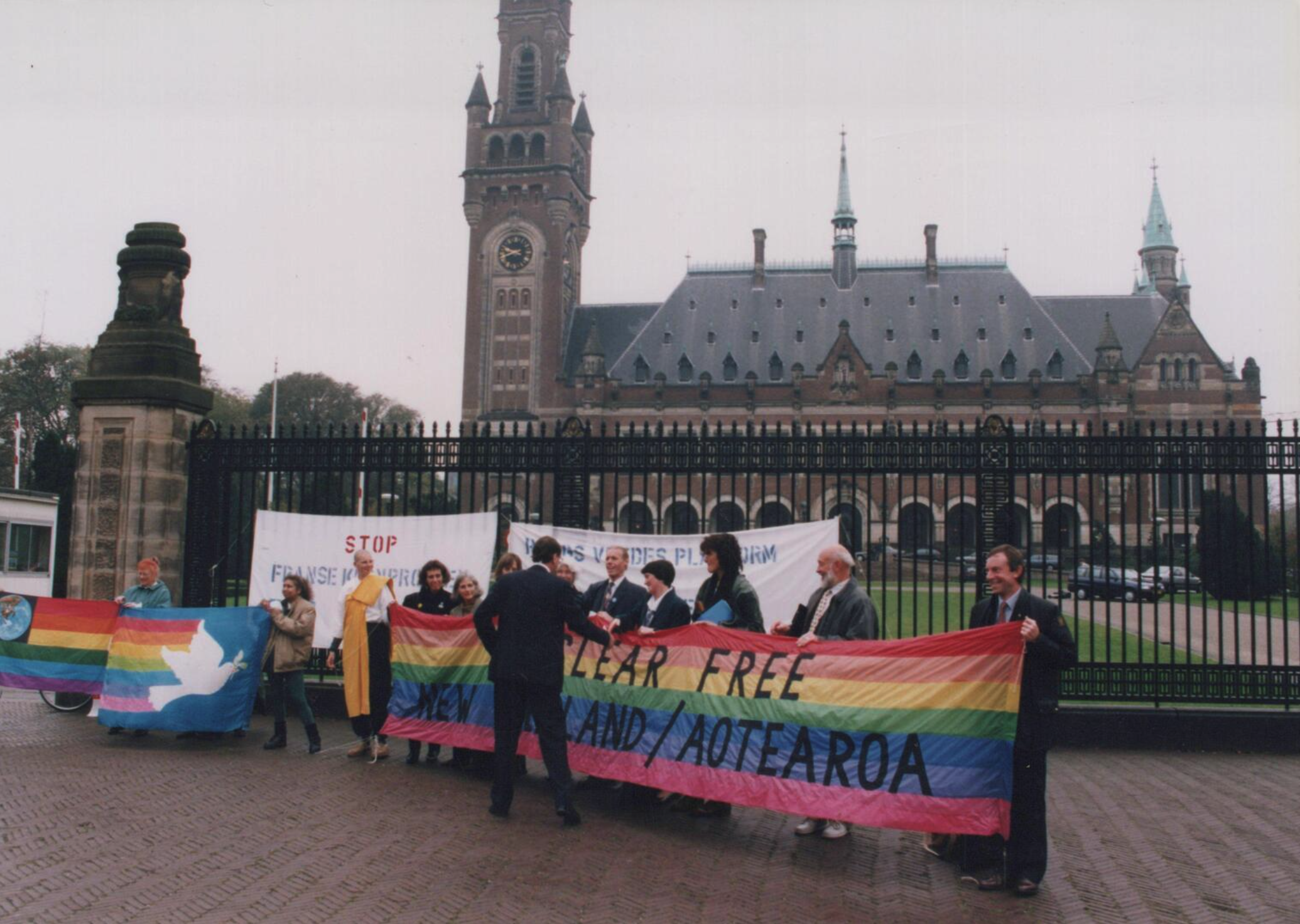
They built support with New Zealand and international doctors, lawyers and peace campaigners that gradually won New Zealand and other government support, was backed by over 700 citizen groups worldwide, and drew 4 million individually signed declarations of public conscience.
Evans and Dewes saw an opportunity to clarify the legal status of the use or threat of use of nuclear weapons at the world’s highest court. This was important; the threat to use these weapons on civilians was the core element of some states’ foreign policy. At the same time, many people around the world believed that it was possible to seek alternatives, to achieve peace and security without the threat of incinerating millions and destroying the planet. Chemical and biological weapons had been banned. Why not then try to outlaw the most destructive of all weapons?
Since the World Court delivered its advisory opinion 30 years ago, there has been further progress. In 2017, the UN adopted the Treaty on the Prohibition of Nuclear Weapons (TPNW), giving a clear legal ruling against not just the threat or use of nuclear weapons, but also against their possession.
When we hear President Trump declaring that Iran should never be able to get a nuclear weapon, we should remember that in fact no state can legally threaten or use nuclear weapons. Double standards are not acceptable: under the World Court ruling and the TPNW, the US, with 5200 nuclear weapons, its ally Israel, which has around 100 nuclear weapons, and the other seven nuclear weapon states, should be condemned as hypocrites for posing a grave threat to the peace and security of the world by risking nuclear catastrophe.
Getting to a nuclear-free world will not be easy. It will require security assurances, strict international monitoring and control, political goodwill on all sides, and excellent global leadership. But it can be done, politically and technically. The alternative, of risking unparallelled disaster, is simply not tenable.
New Zealand has shown diplomatic leadership and skill when addressing the dangers of nuclear weapons and it has a well-deserved global reputation in this field.
It also has a very high level of local knowledge and expertise in peace, arms control, and disarmament.
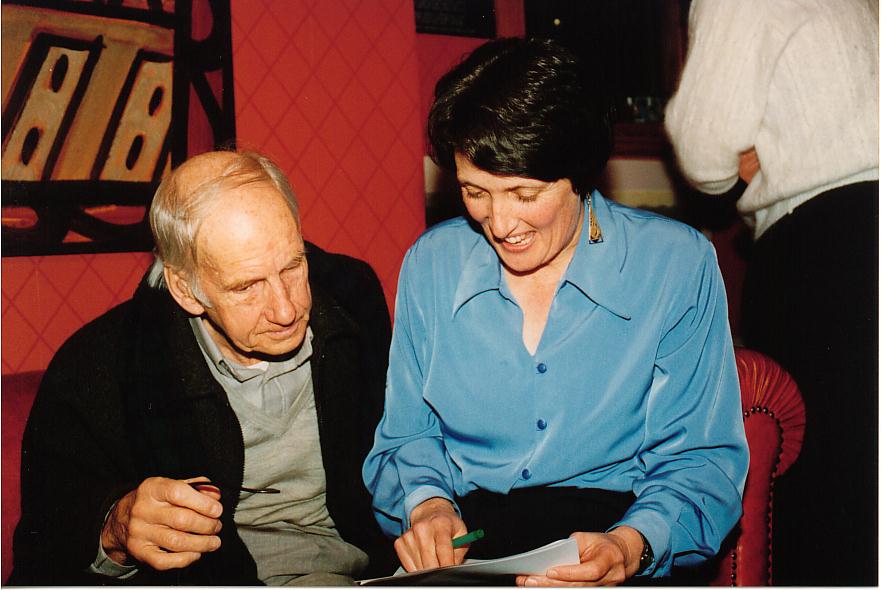
Much of that can be traced back to Ōtautahi Christchurch (also New Zealand’s first nuclear free and “Peace City”) which has produced many luminaries advocating for peace and justice. Without the vision and action taken by many individuals, communities and governments, the change in the way nuclear weapons were viewed legally would not have happened. And that in turn would have made it even harder to challenge nuclear orthodoxy and rein in the worst excesses of nuclear sabre-rattling.
We still have a long way to go to achieve a nuclear-free world, but the pebble dropped into the water in Christchurch produced ripples that have had a profound effect at a global level, reminding us that we can all play a part in seeking peace and justice. We can all make a difference.
