
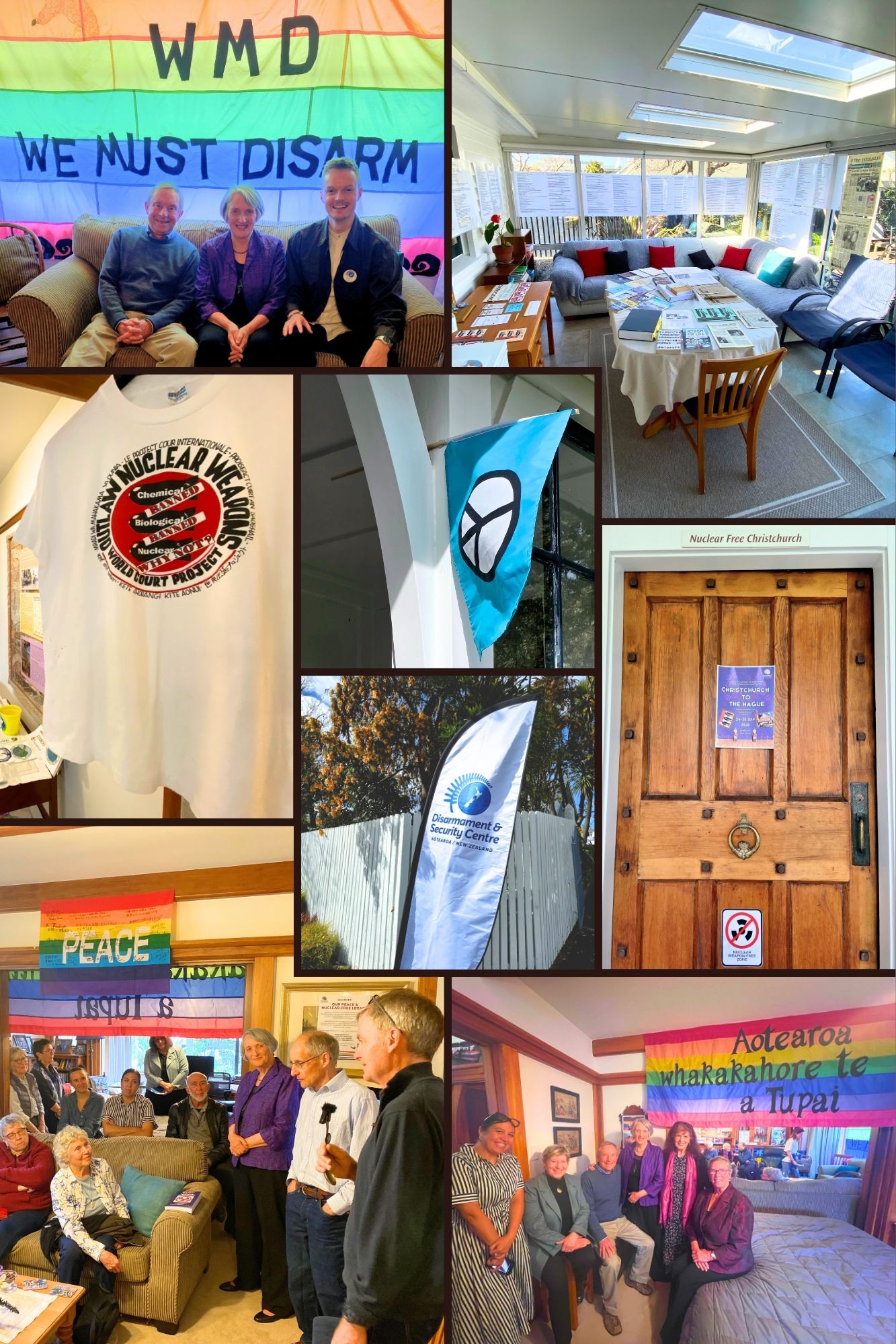
On 23–24 September 2026, Te Whare Maukāroko | House of Peace came alive again as the Disarmament and Security Centre (DSC) hosted Christchurch to The Hague, an interactive exhibition marking 30 years since the International Court of Justice’s landmark 1996 Advisory Opinion on the legality of the threat or use of nuclear weapons.
The event brought a historic gathering place back to its roots: a whare for peace and community. Recognised as a Heritage House by Christchurch City Council in 2022, Te Whare Maukāroko | The House of Peace has welcomed peace campaigners, atomic bomb survivors, diplomats, MPs, academics, and students from around the world for more than four decades. It served as the local hub for the campaign that brought the question of nuclear weapons before the world’s highest court, hosting a midnight vigil when the Court delivered its historic opinion in July 1996.
Fifteen years after the Christchurch earthquakes severely damaged the house, and following years of disruption and legal challenges, the exhibition marked a significant moment in the whare’s revival as a place of community.
The exhibition drew on years of work by the DSC to preserve important movement materials in Christchurch’s heritage institutions. It brought together photographs, archival documents, banners, artwork, film, and historical artefacts from the DSC, Canterbury Stories, Canterbury Museum, and the Macmillan Brown Library’s Peace and Disarmament Collection.
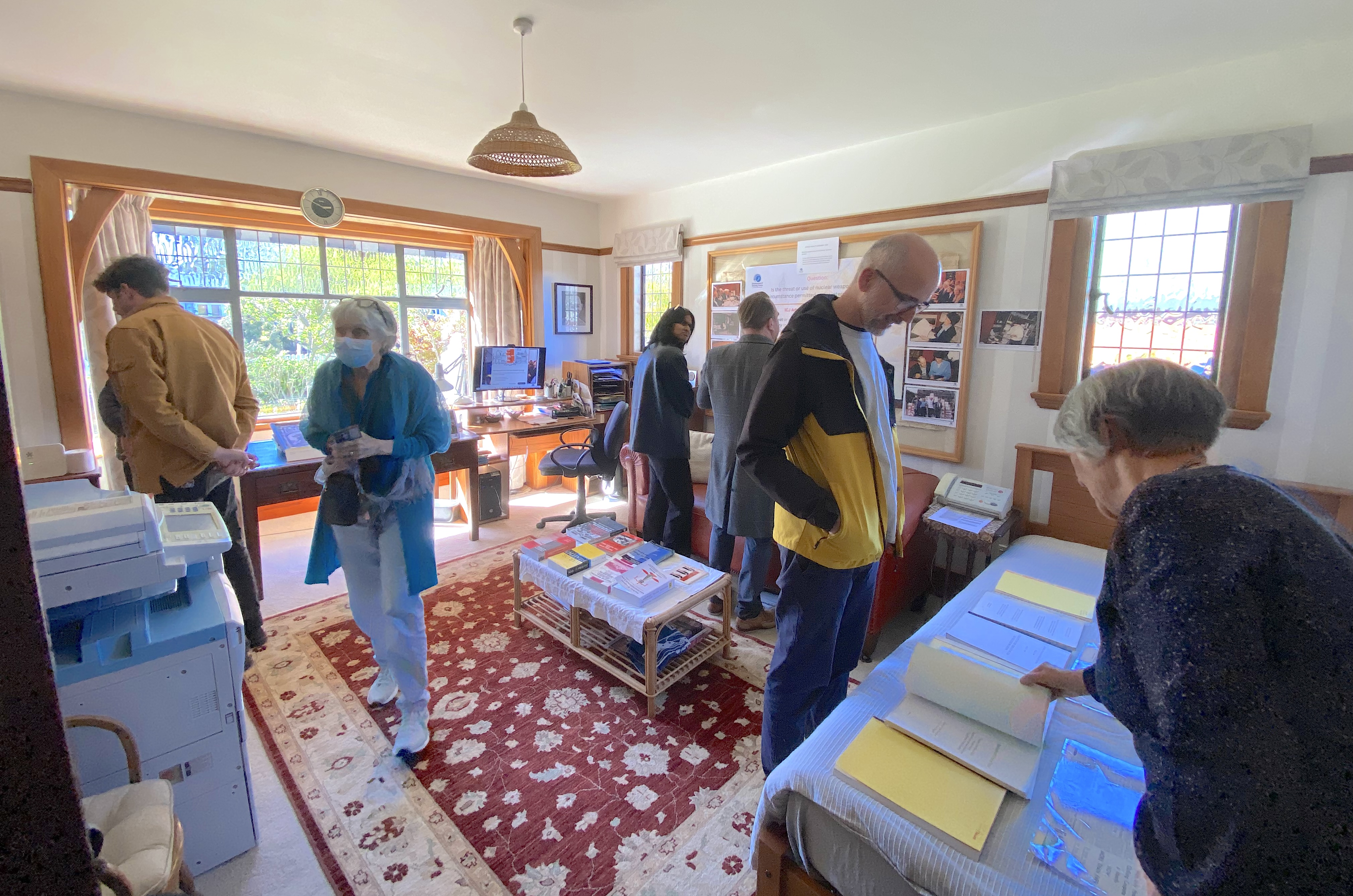
The exhibition welcomed a broad cross-section of the community, including academics and students from Ara Institute of Canterbury and the University of Canterbury, Macmillan Brown Library and Christchurch City Libraries staff, city councillors and Council staff, local MPs and candidates, museum staff and leadership, and members of the peace movement and civil society organisations. TVNZ also visited to produce a story of the exhibition featuring archival footage broadcast during its 6pm news bulletin.
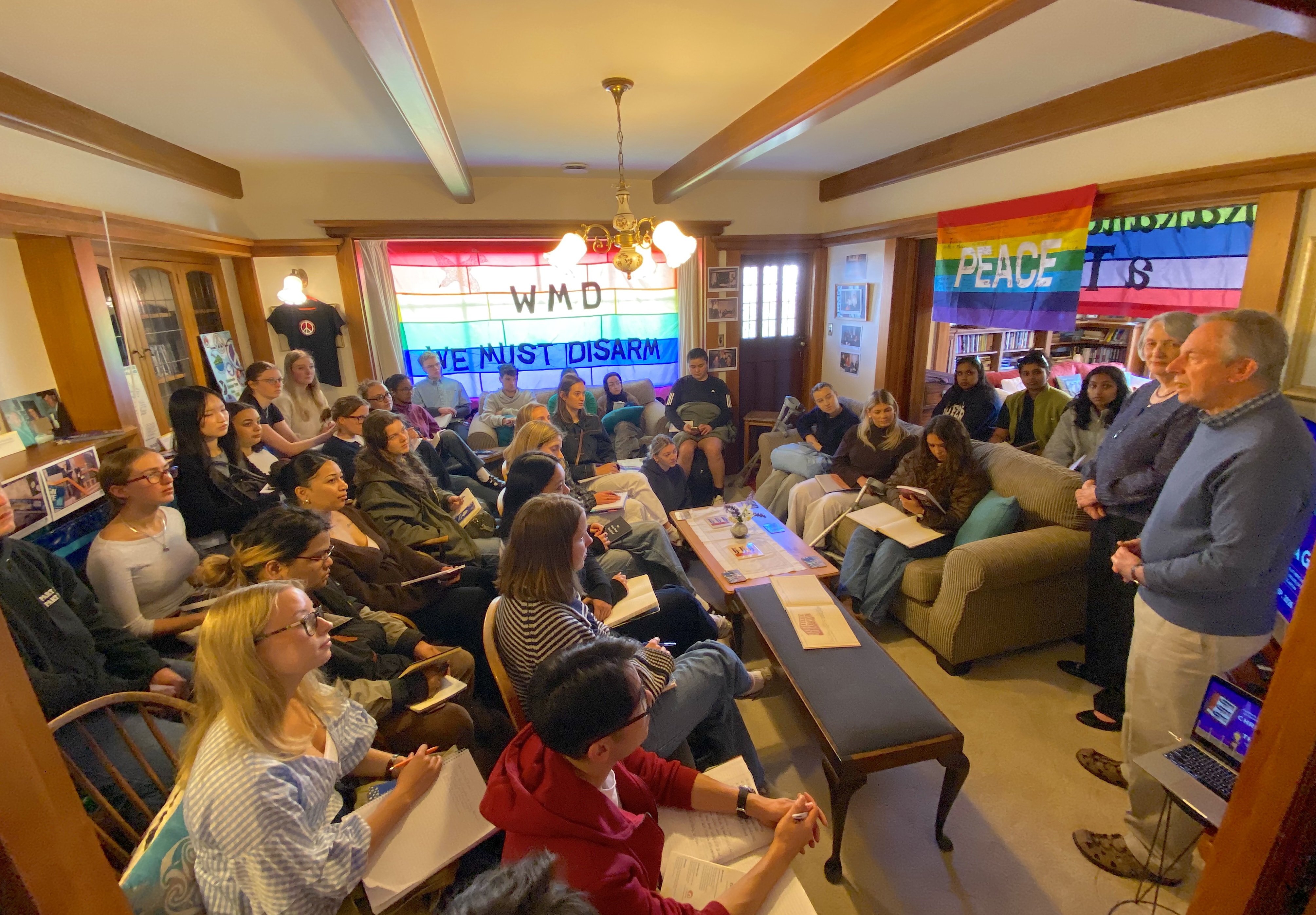
The exhibition opened with a visit from 35 University of Canterbury political science students. Their reflections highlighted how Christchurch-based activism had helped shape international law and demonstrated the potential of collective action.
One student wrote:
“During the visit, I came to understand that when communities, citizens, activists, organisations and governments work together, they can facilitate meaningful social change through international institutions, challenge established norms and transform public opinion into international political action.”
Another reflected on the importance of seeing the original historical materials:
“To see literal pieces of history like the large disarmament flags, or the copy of Harold Evans’ signed Declaration of Public Conscience shows the extent of work they had to put in.”
Hearing directly from campaign leaders Dr Kate Dewes and Commander Robert Green RN (Ret’d), alongside DSC kuia Pauline Tangiora, made the history especially tangible. As one student concluded:
“Overall, the visit showed me that anything is possible. If this small group of Kiwis can have such a big impact, what is stopping us from achieving the same?”
These responses captured the exhibition’s purpose: not simply to preserve the past, but to inspire the next generation of leaders to recognise the influence that individuals and communities can have on the world stage. As future leaders of Aotearoa New Zealand, these students were reminded of the importance of a small state continuing to stand up for its principles, champion international law, and work collectively to advance peace and nuclear disarmament - values that remain vital today and will be essential in the decades to come.
The final afternoon of the exhibition culminated in a gathering of over 60 members of the Christchurch peace movement, including former MPs, mayors and city councillors; many of whom had been involved in the campaign and celebrated the Court’s opinion at the whare in 1996. For many, the artefacts represented lived experience: years of organising, campaigning, sacrifice, and determination. The fax machine on display with the Court opinion offered a tangible link between the events of 1996 and those who had witnessed them firsthand in the World Court.
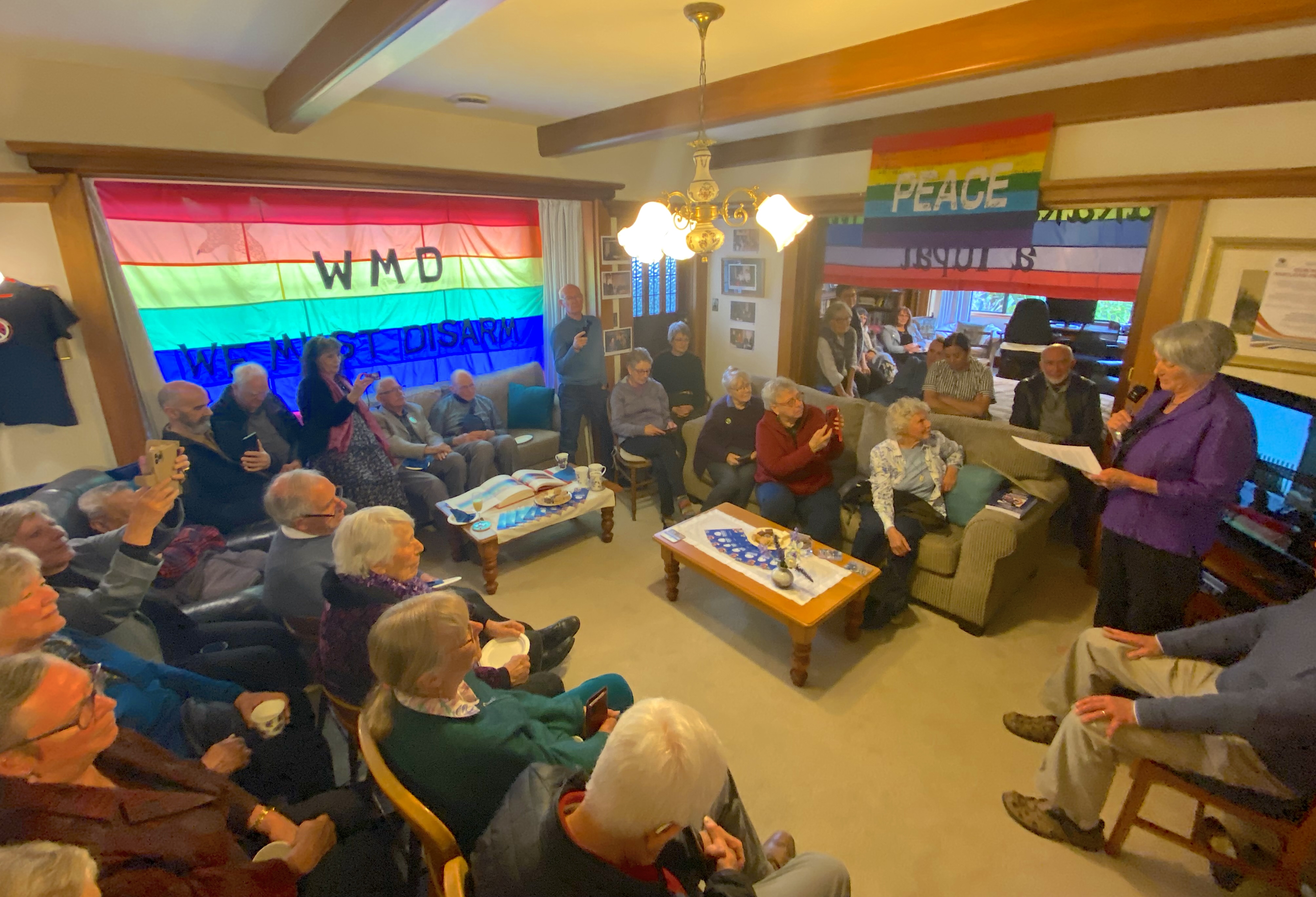
For a house, and city, that has endured earthquake damage and years of challenges, welcoming the peace movement back to the whare was itself a milestone. Te Whare Maukāroko once again served as a place to gather, remember, and reflect on the continuing pursuit of peace.
The Director of Canterbury Museum, Anthony Wright, described the exhibition as “a triumph”, congratulating the DSC and its supporters on the exhibition and its media coverage. The collaboration will continue in 2027, when the DSC and Canterbury Museum will open a peace exhibition at the Museum’s Pop-up site in the COCA Gallery. Content from this exhibition will form the basis of a long-term display of Canterbury’s peace heritage in the redeveloped Museum, scheduled to reopen from 2029.
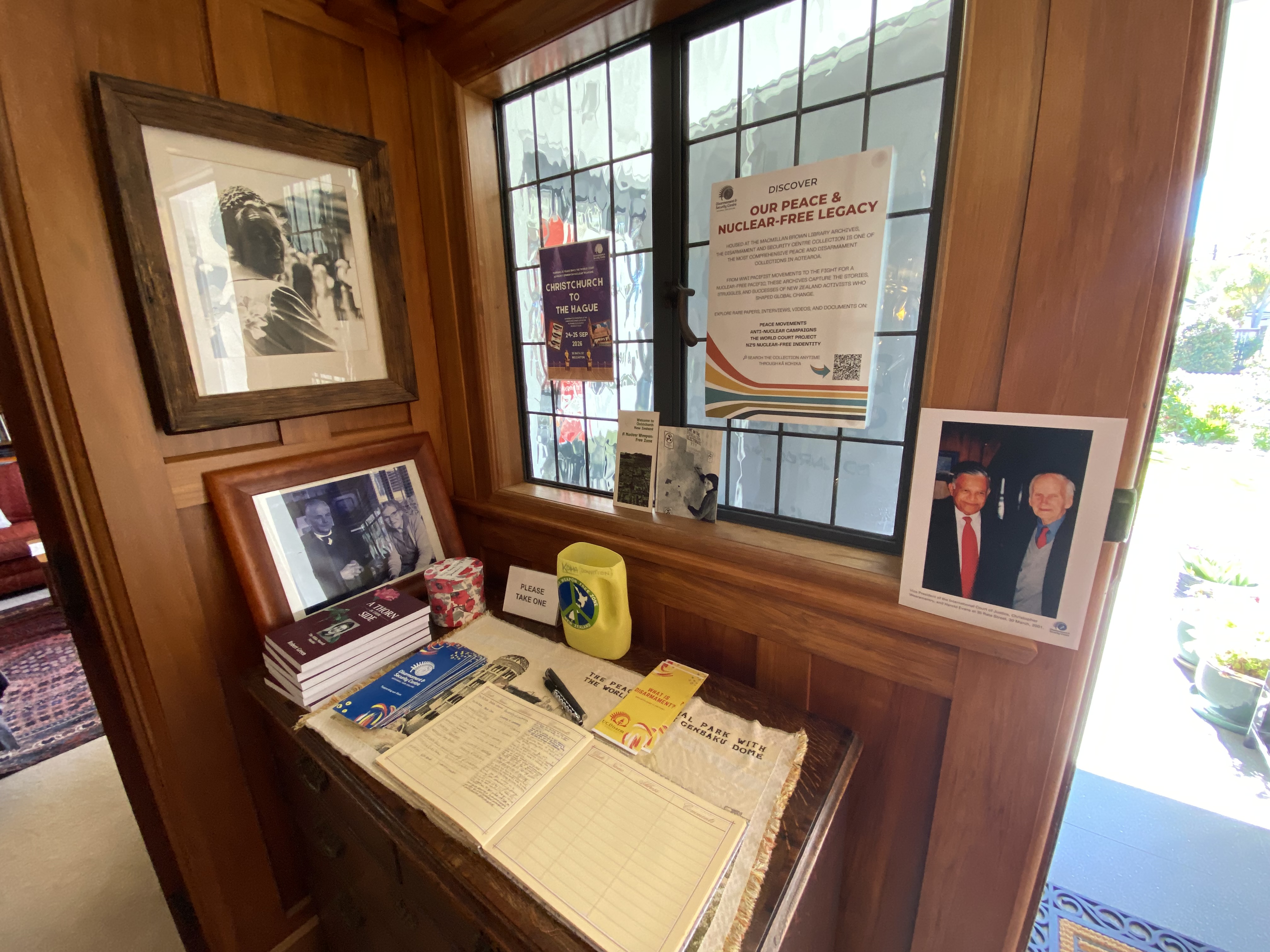
Thirty years after the World Court opinion, Christchurch to The Hague demonstrated why preserving this history matters. By bringing together peace campaigners, students, taonga, and personal testimony in one of the key homes where the campaign unfolded, the exhibition connected generations, linking Christchurch’s rich peace heritage to the present and future.
The DSC thanks the Macmillan Brown Library, Canterbury Museum, Christchurch City Libraries, and the City Council, and everyone who contributed materials, shared their memories, or attended the exhibition. Watch this space for more events over the coming year.
