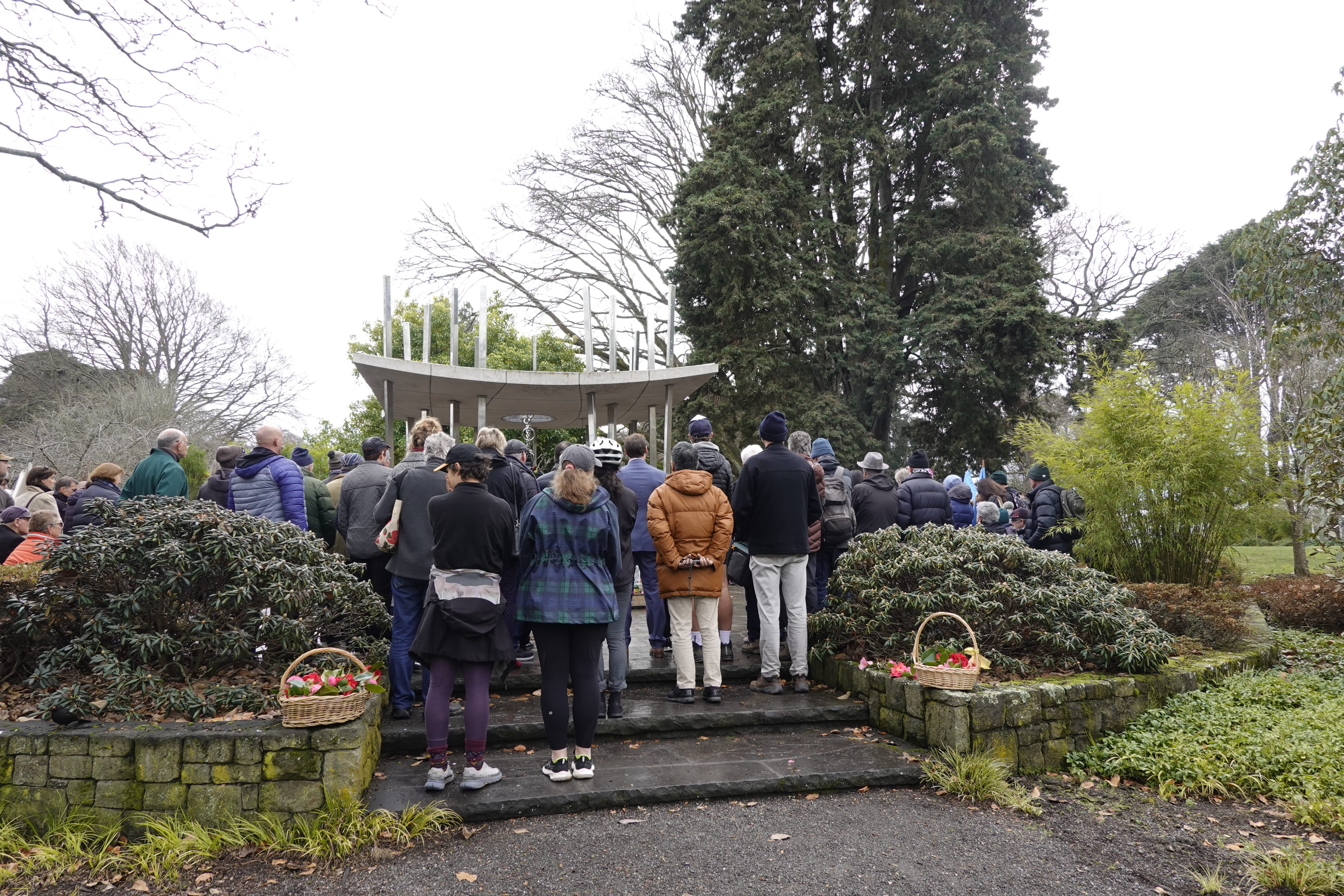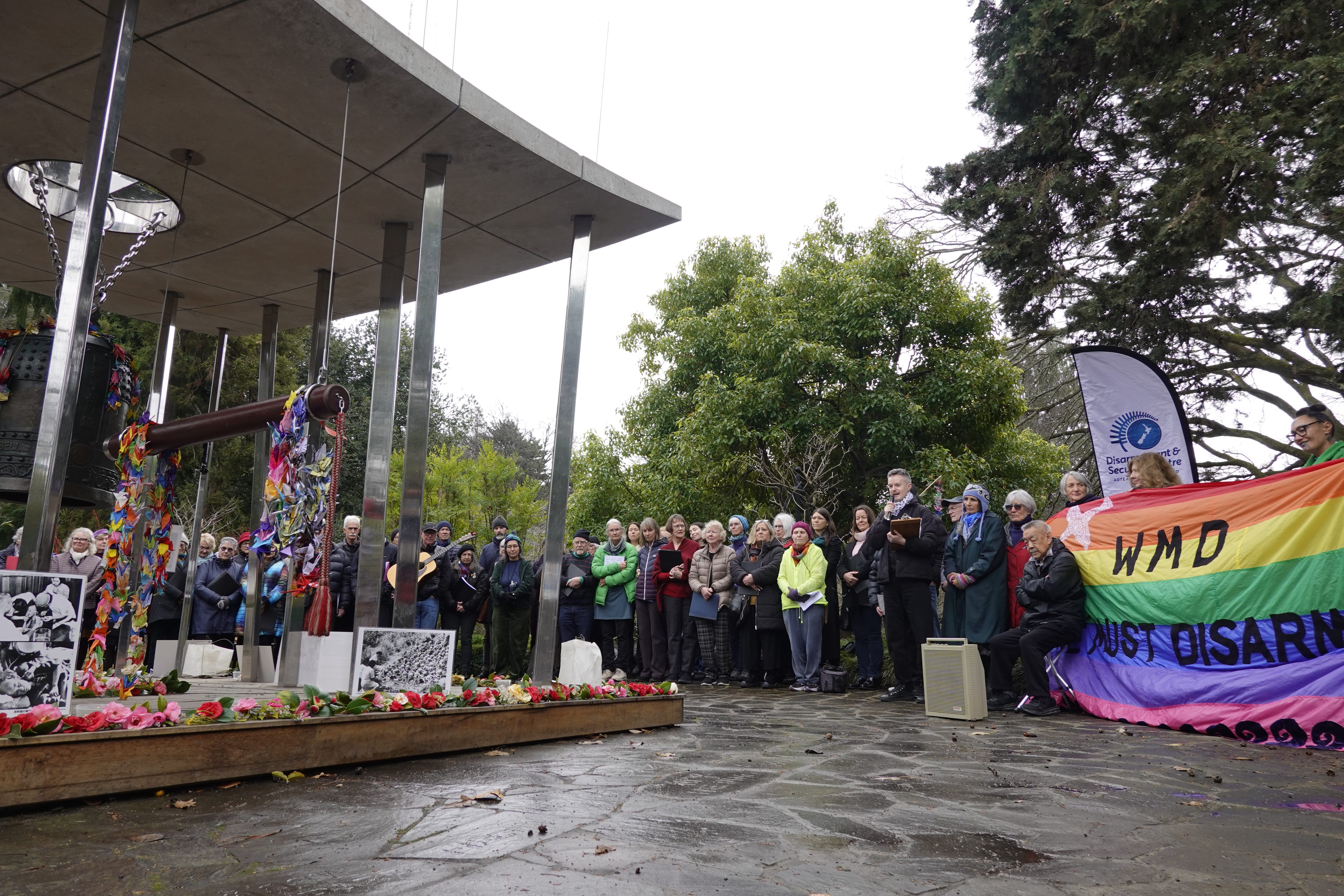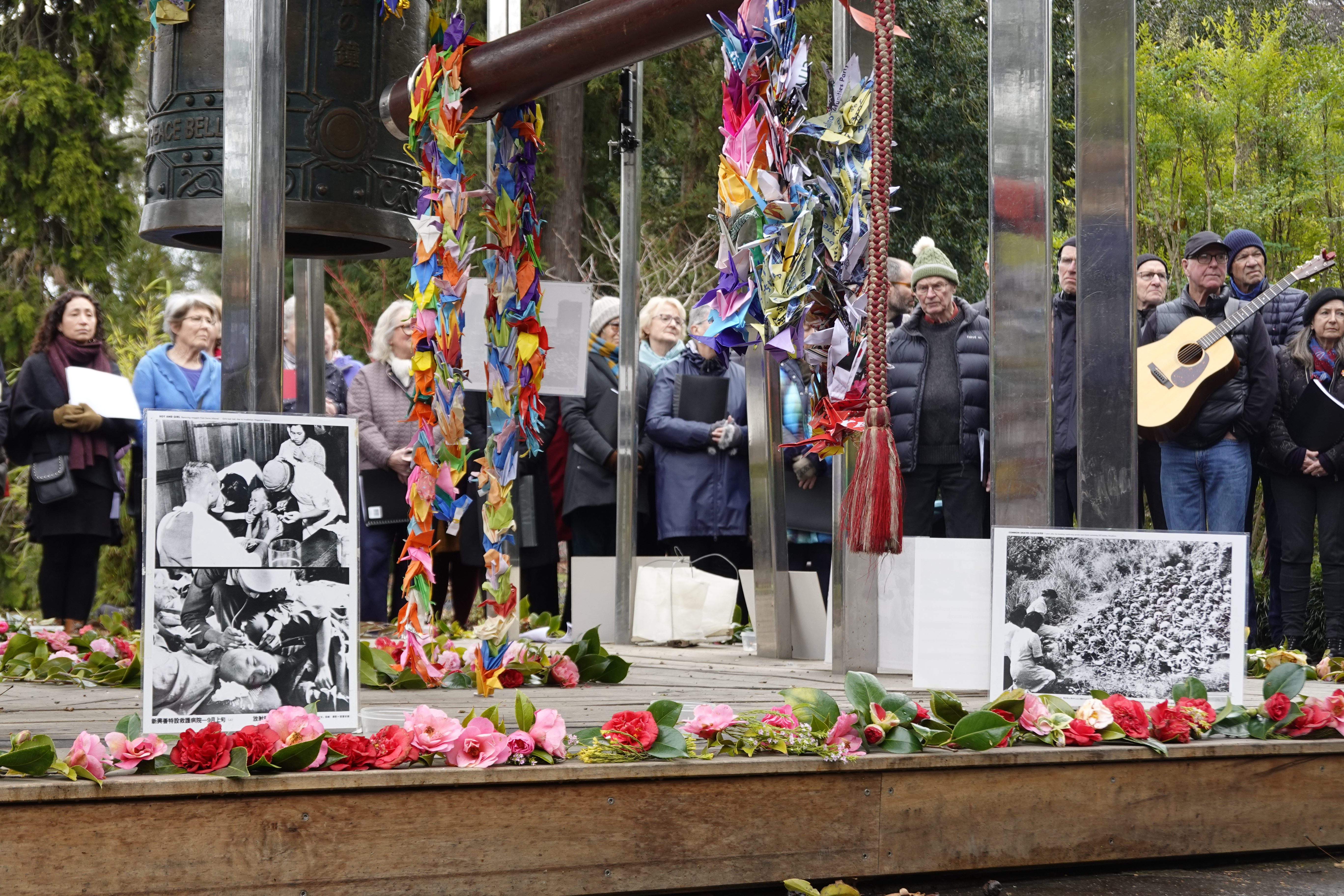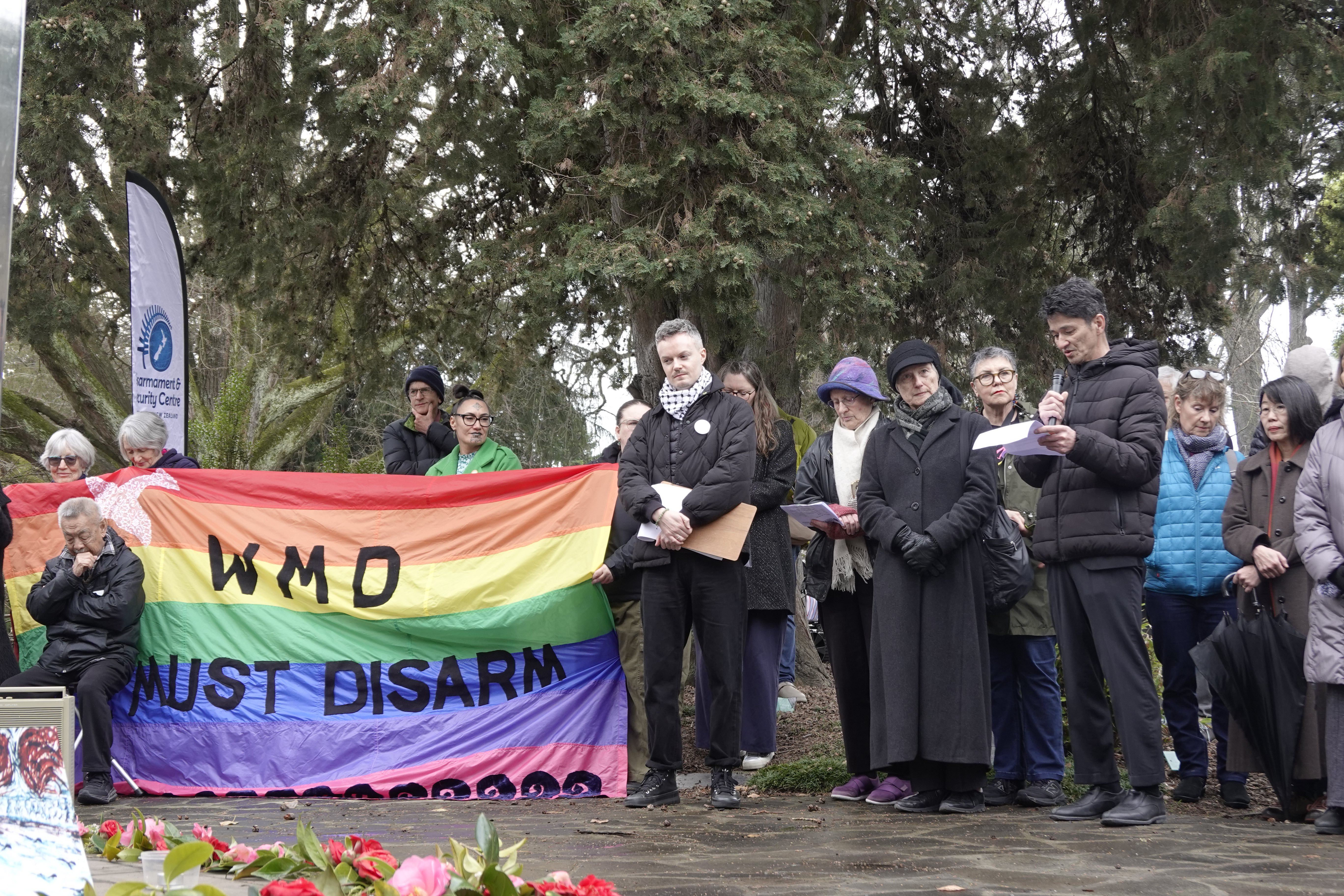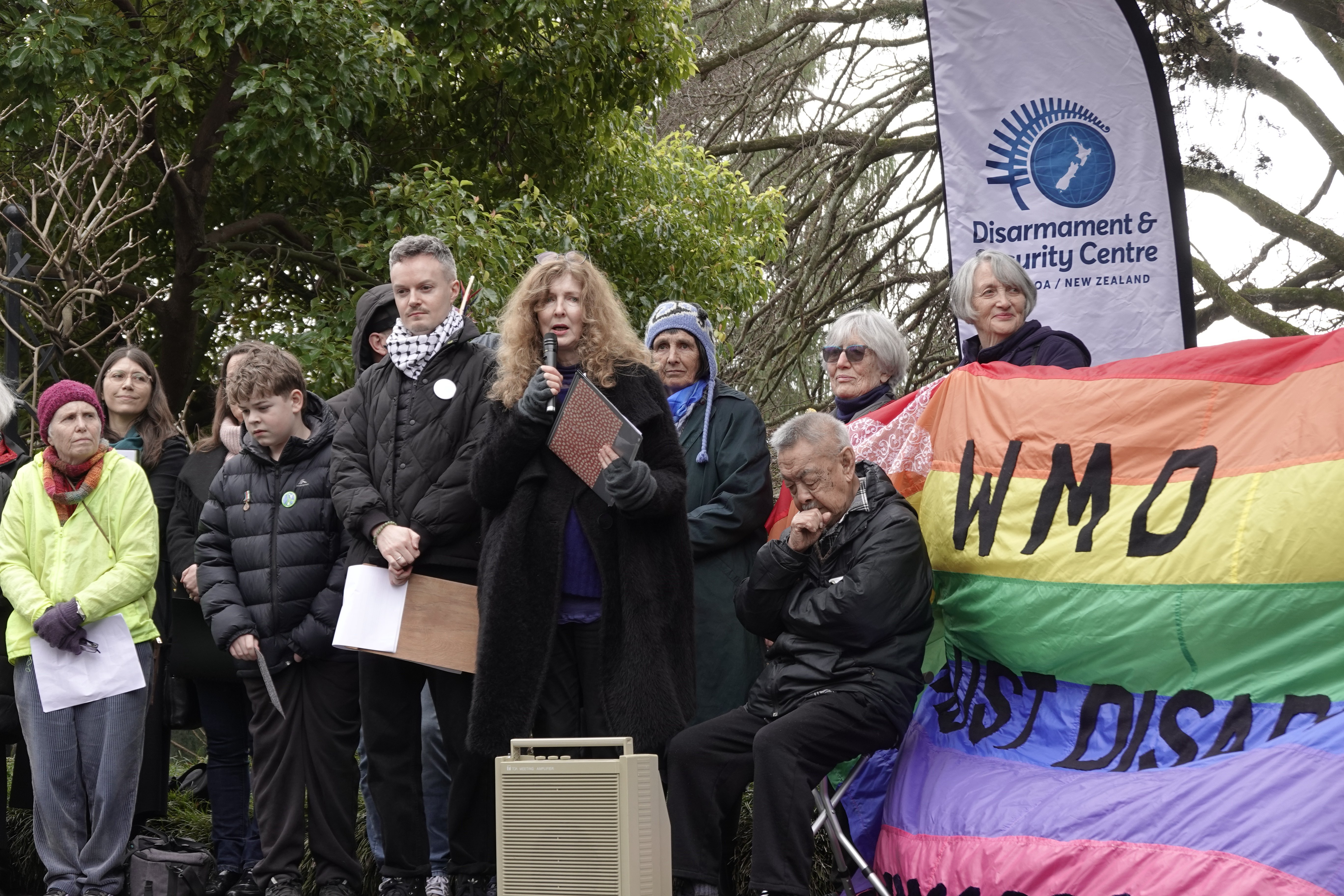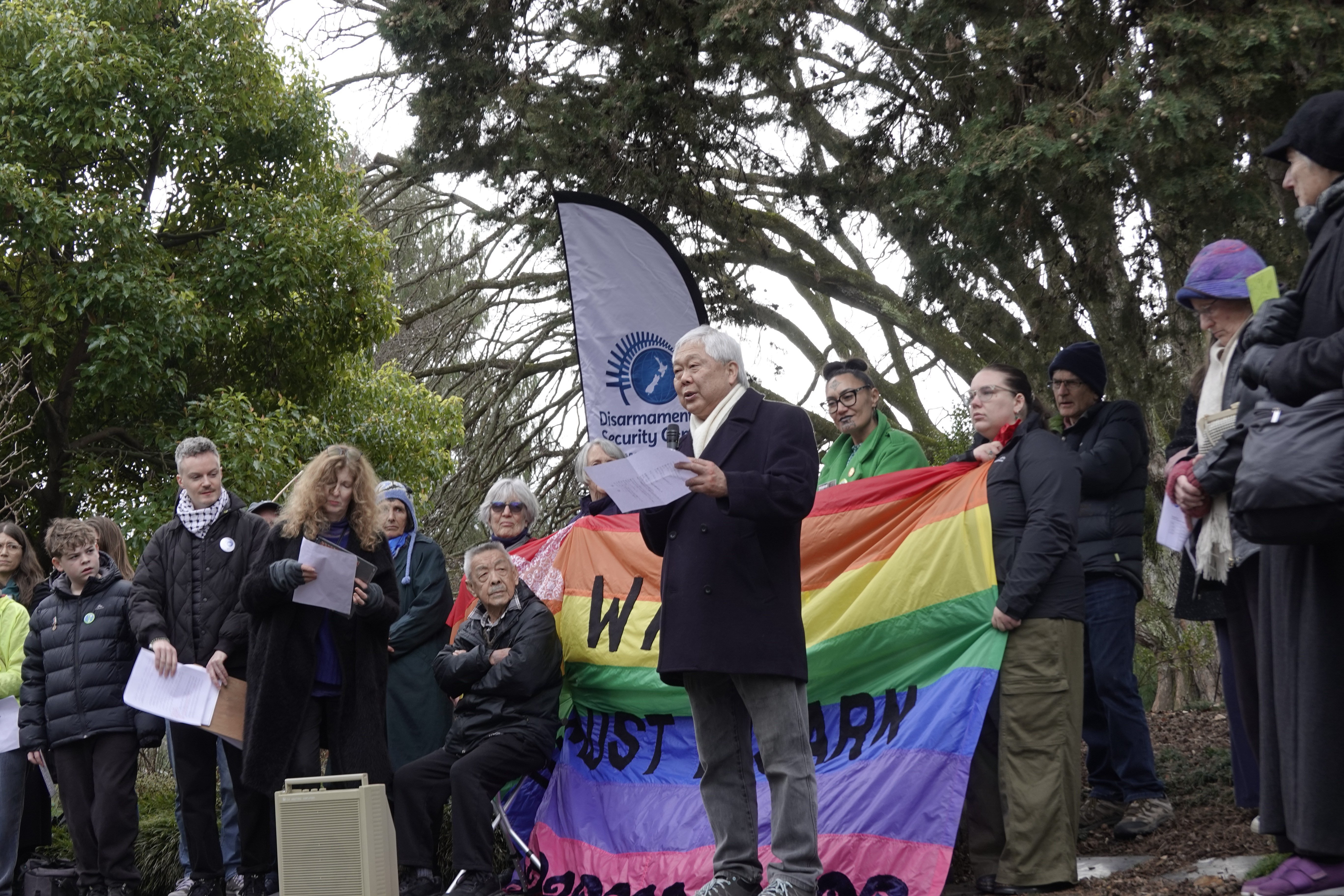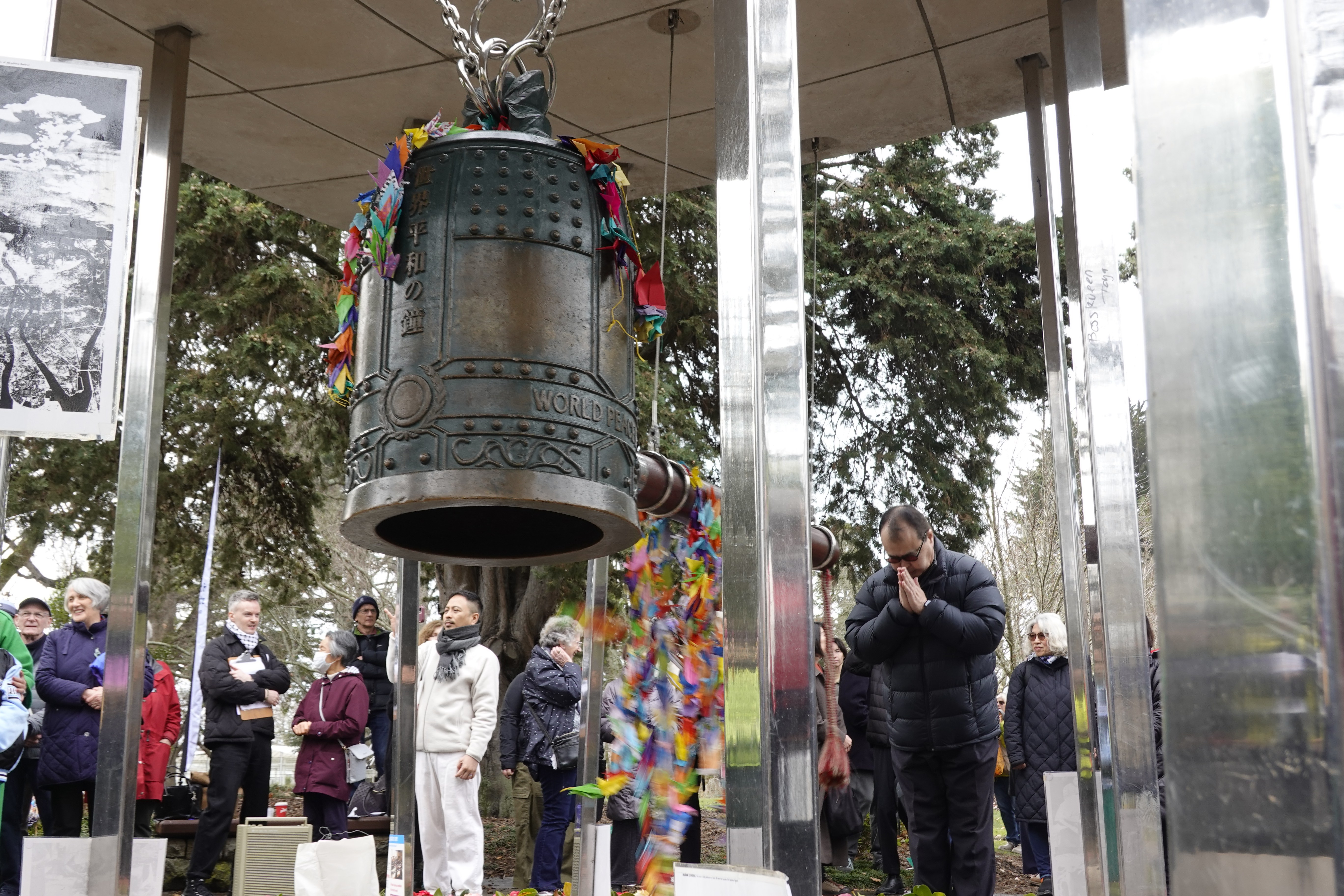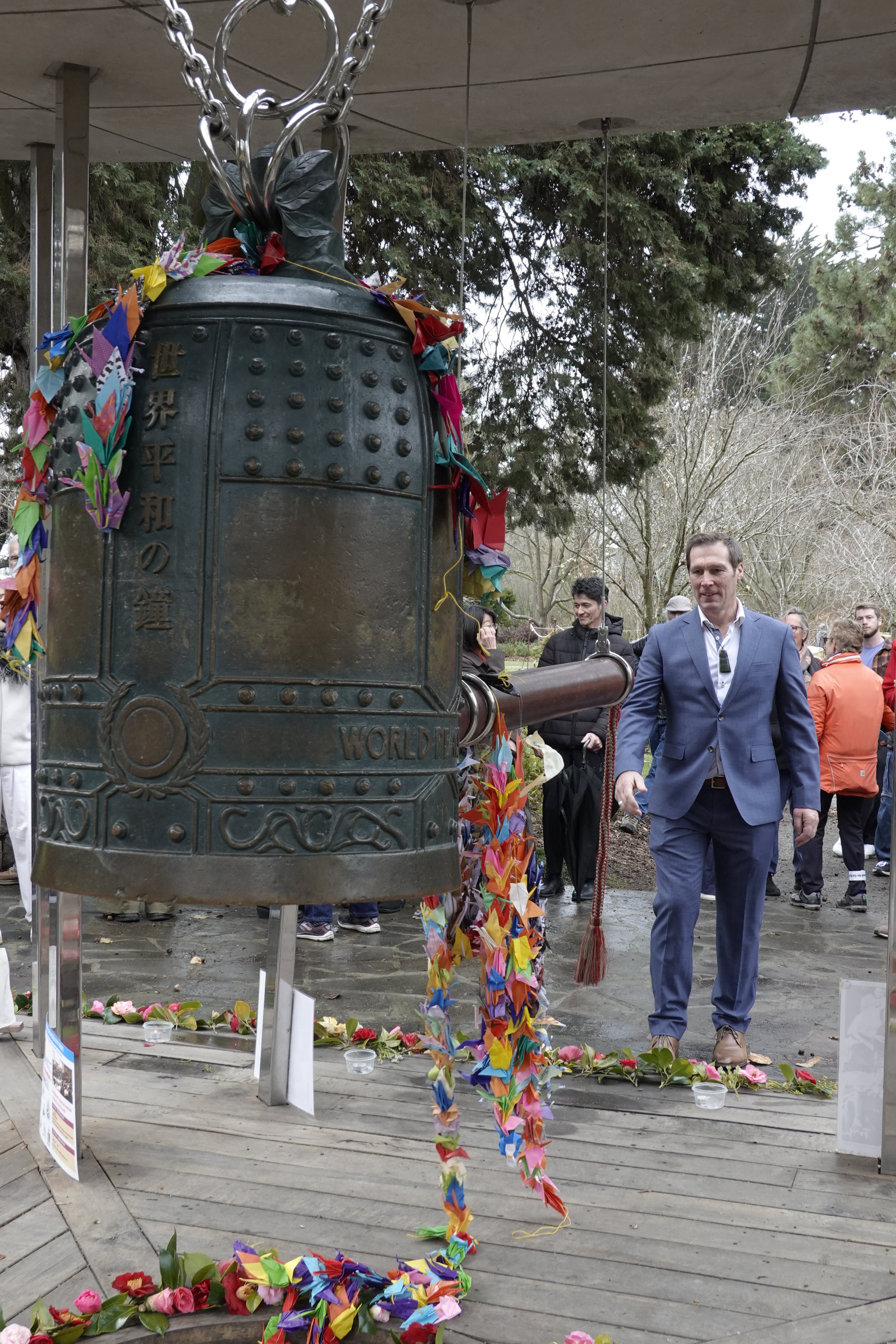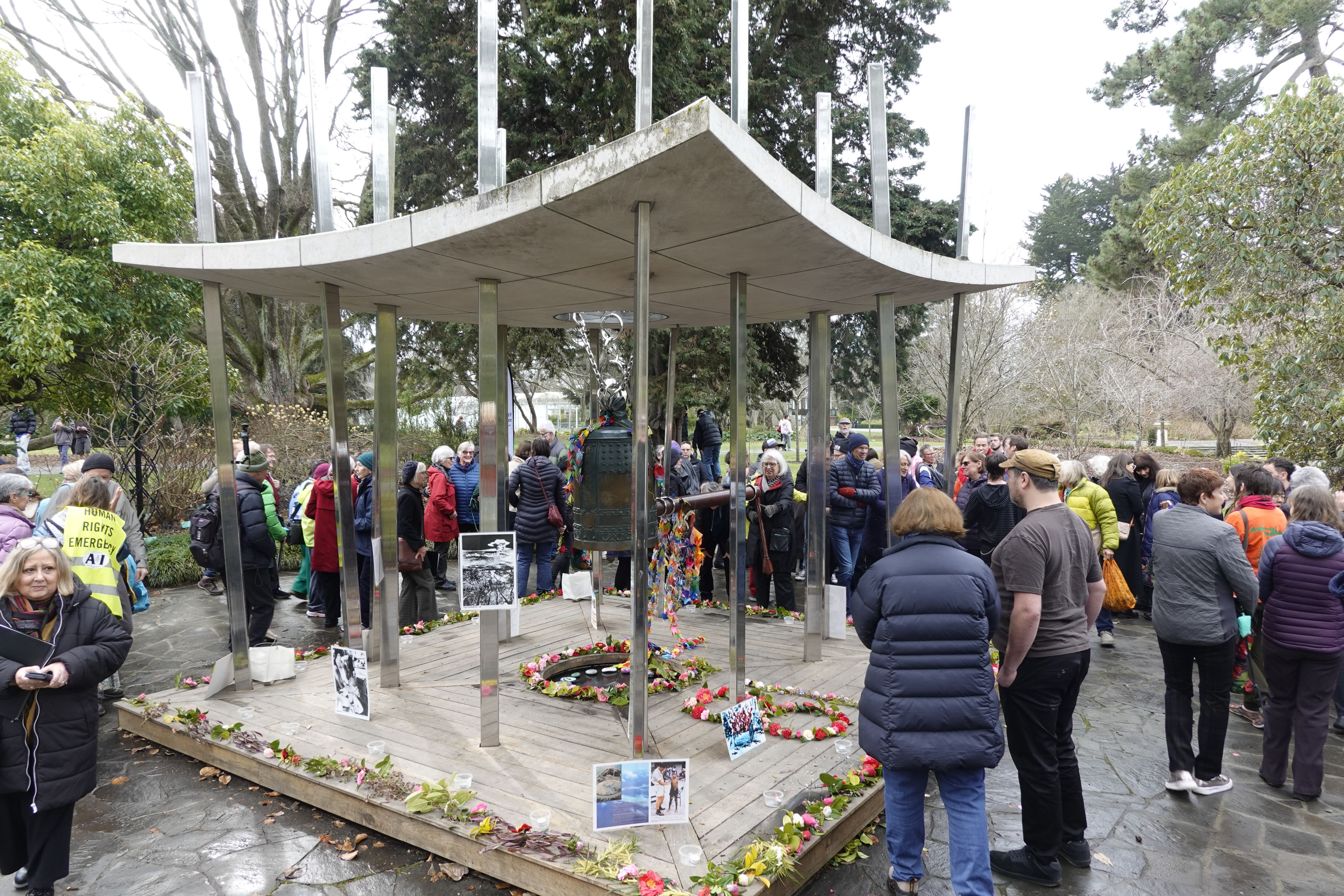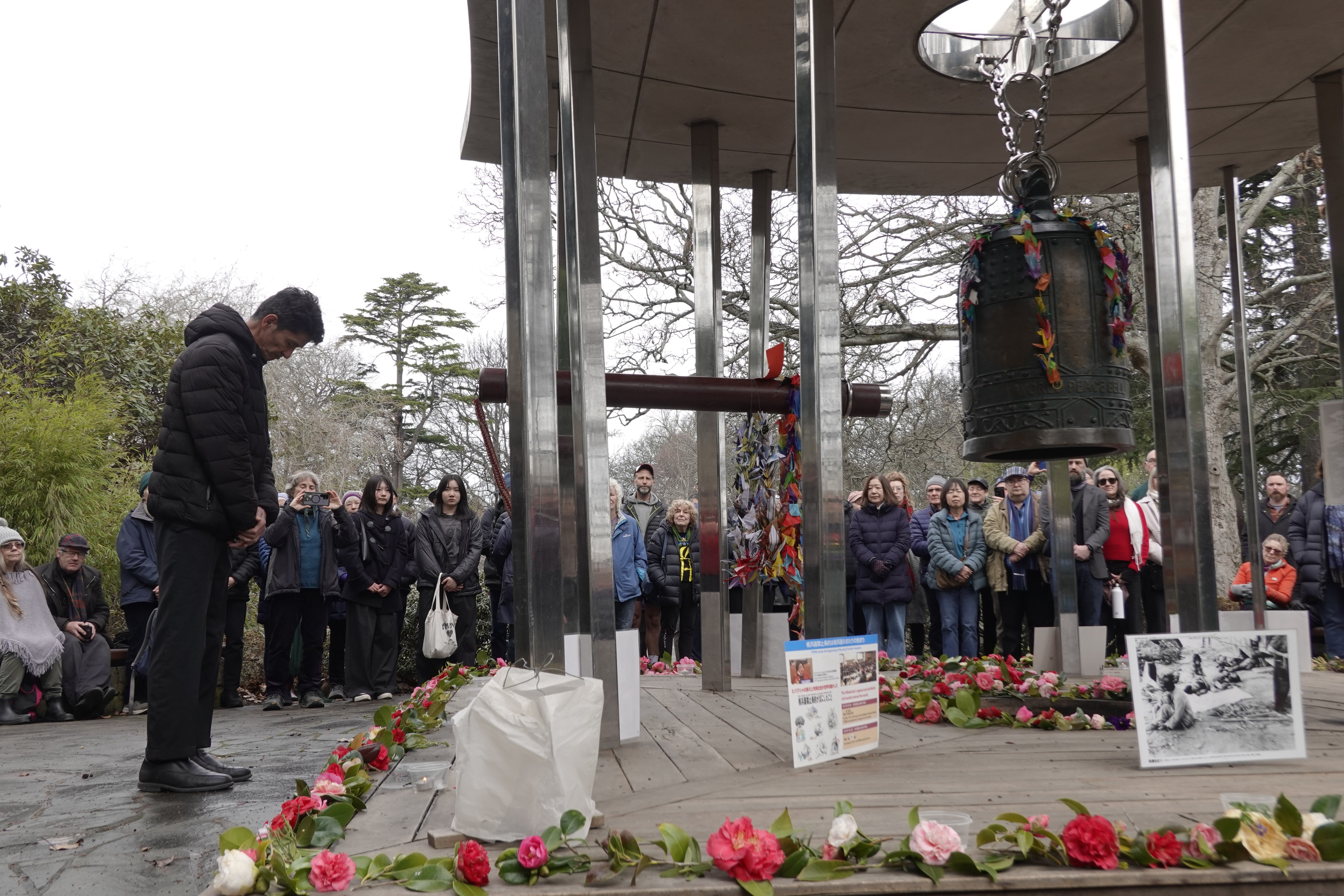
On Sunday August 9th, 2026, a large group of around 200 people gathered at the World Peace Bell in the Ōtautahi / Christchurch Botanic Gardens to commemorate the 81st anniversary of the atomic bombings of Hiroshima and Nagasaki, which happened in 1945.
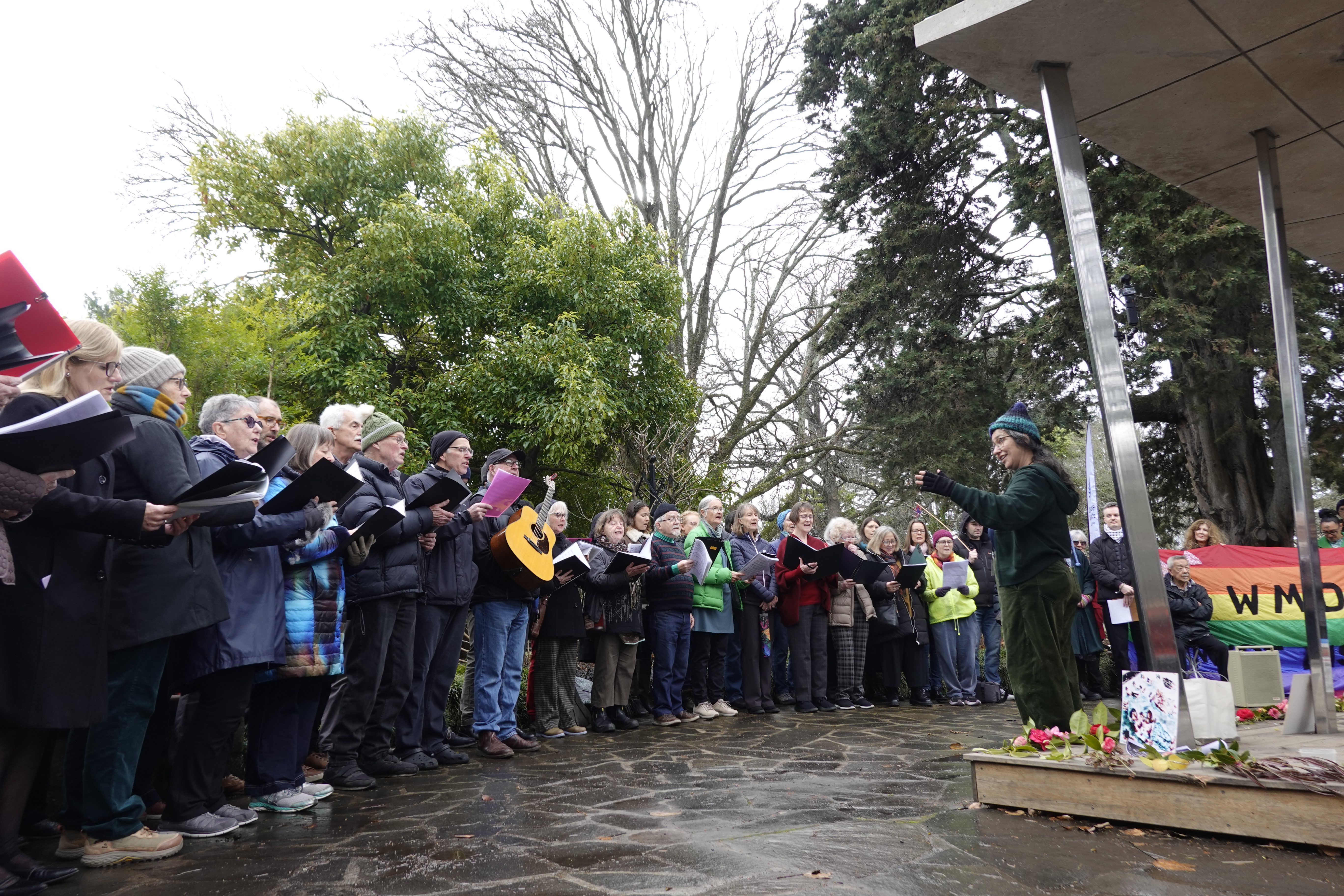
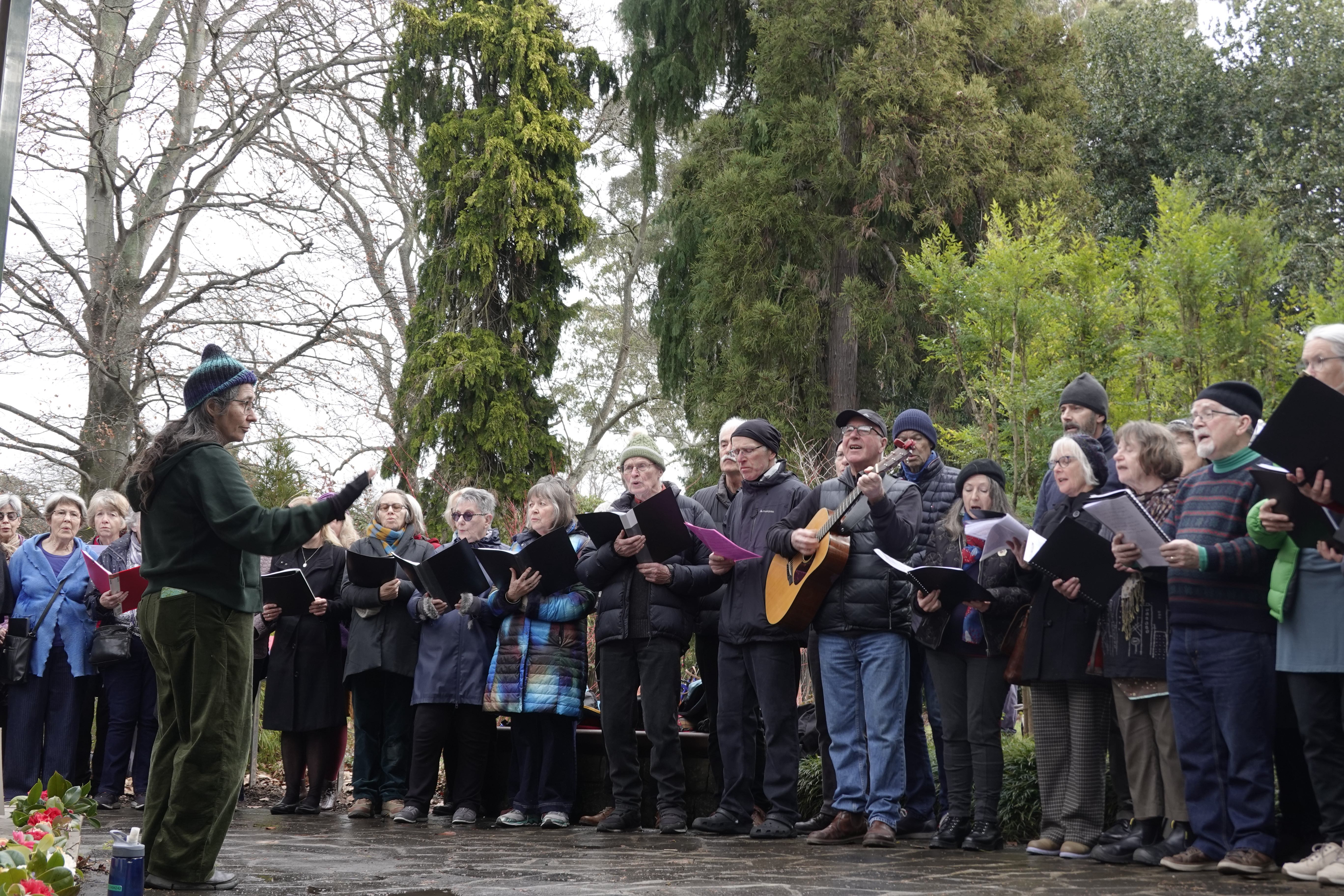
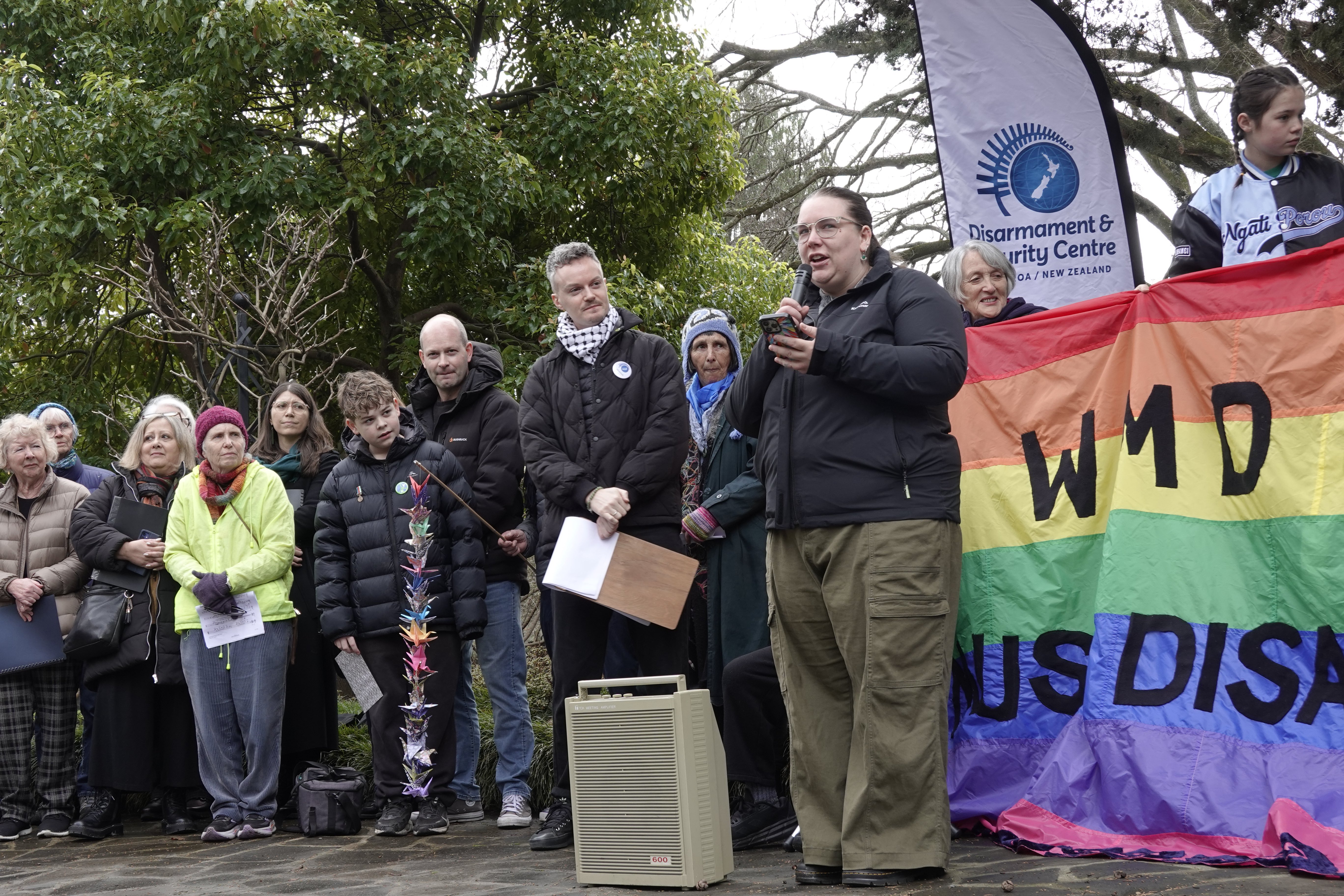
Led by Dr Marcus Coll, from the Disarmament and Security Centre, the event began with a karakia offered by Kathleen Gallagher of Ngāi Tahu. Dr Melanie Coker of the Christchurch City Council spoke about the significance of the anniversary, after which Councilor Coker rang the World Peace Bell to lead a minute’s silence. This was followed by a moving musical performance by the large group of singers from the Muse Community Music Trust, directed by Nikki Barry, who sang Sato No Aki, a Japanese lullaby.
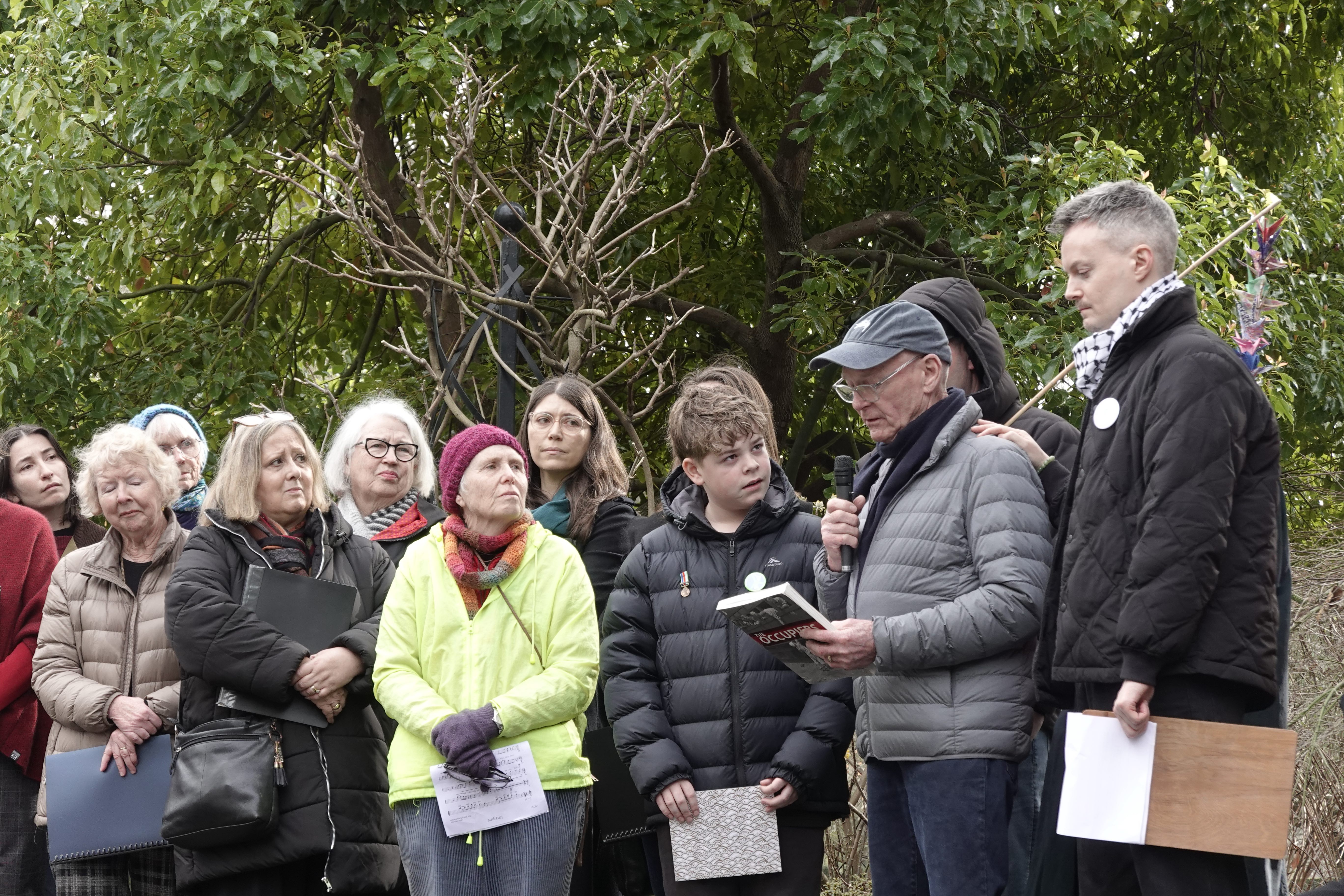
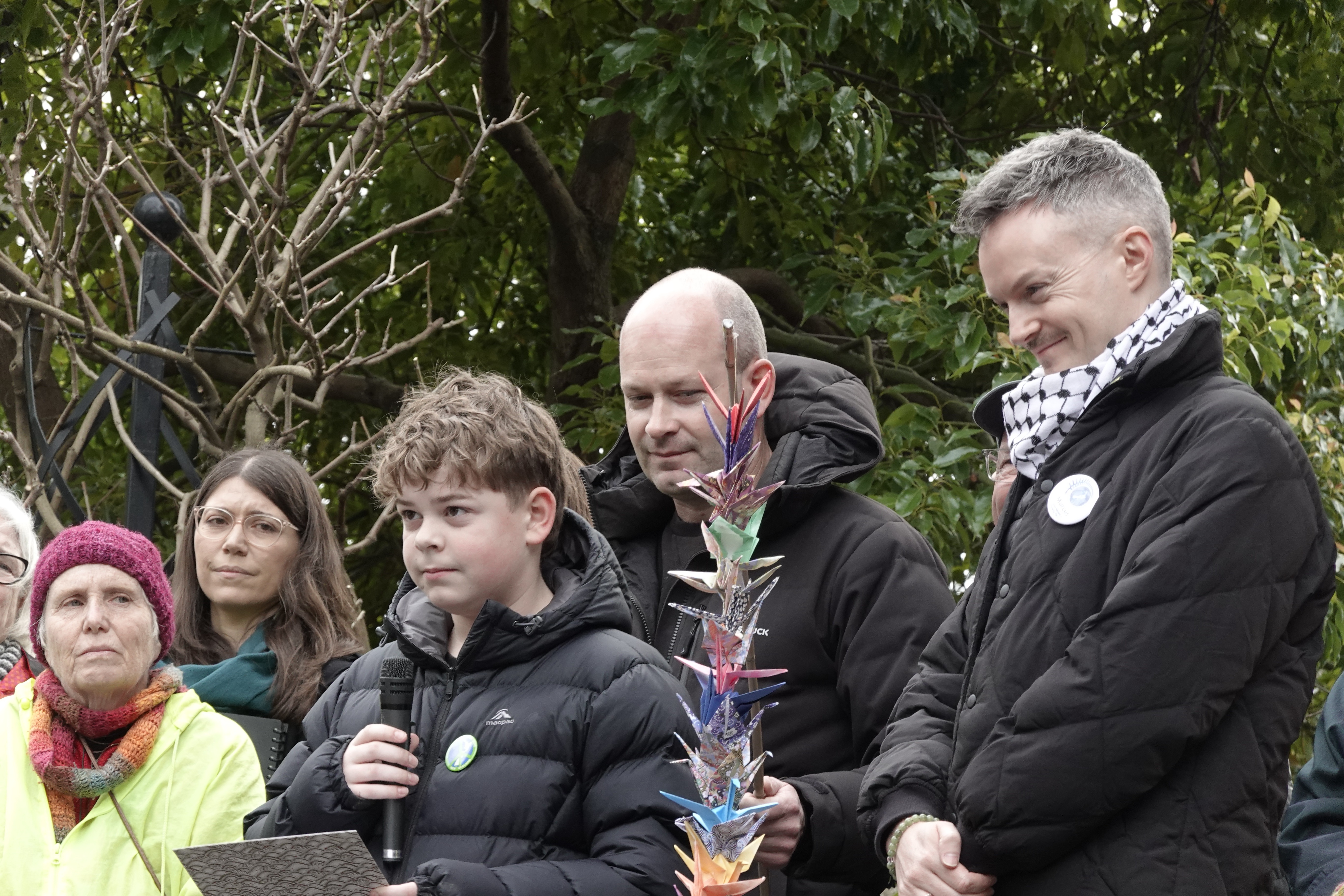
The Japanese Consul in Christchurch, Mr Ken Nakamura, addressed the gathering, paying tribute to the hibakusha—the survivors of the atomic bombings—who have courageously advocated for nuclear abolition for eight decades. Dr Susan Bouterey of the University of Canterbury read an excerpt from the memoirs of Hiroshima survivor Bun Hashizume, while Steve Coll, a descendant of a J-Force soldier, and wearing his Father’s service medal, shared recollections from servicemen and women who were among the first New Zealanders to witness the devastation in Hiroshima and Nagasaki after the war. Steve was joined by both his son, Joshua, and grandson, Theo, who both shared reflections and a story about Sadako Sasaki, a young Japanese child who later died from radiation sickness after the bombing.
The Muse singers then sang a beautiful version of John Lennon’s Imagine, adding to the reflective atmosphere. Alex Fyfe, the president of UCDisarm, gave a brief speech on behalf of the club, and then also read the words of the late Elsie Locke, the prominent Christchurch peace campaigner, which speak of the Avon River sharing the same waters that flow through to the Pacific Ocean, connecting the city to Hiroshima and Nagasaki. Despite the winter chill and the solemn purpose of the gathering, the scene was brightened by pink and white camellia flowers picked by locals from the Red Zone, origami cranes, candles and lanterns. People from all walks of life and political parties stood side-by-side in remembrance, including local political candidates George Hampton, Teresa Butler, and MP Mike Davidson. The ceremony concluded with a final karakia and waiata, bringing the gathering to a close in a spirit of reflection and unity.
The event was a powerful continuation of Christchurch’s long-standing tradition of commemorating the atomic bombings. As New Zealand’s first nuclear-free city (declared in 1982) and the nation’s first Peace City (proclaimed in 2002), Christchurch has a proud legacy of promoting peace and nuclear disarmament. This year’s commemoration served as both a remembrance of the victims and a renewed commitment to share the testimonies of the hibakusha, ensuring their lessons endure for future generations.